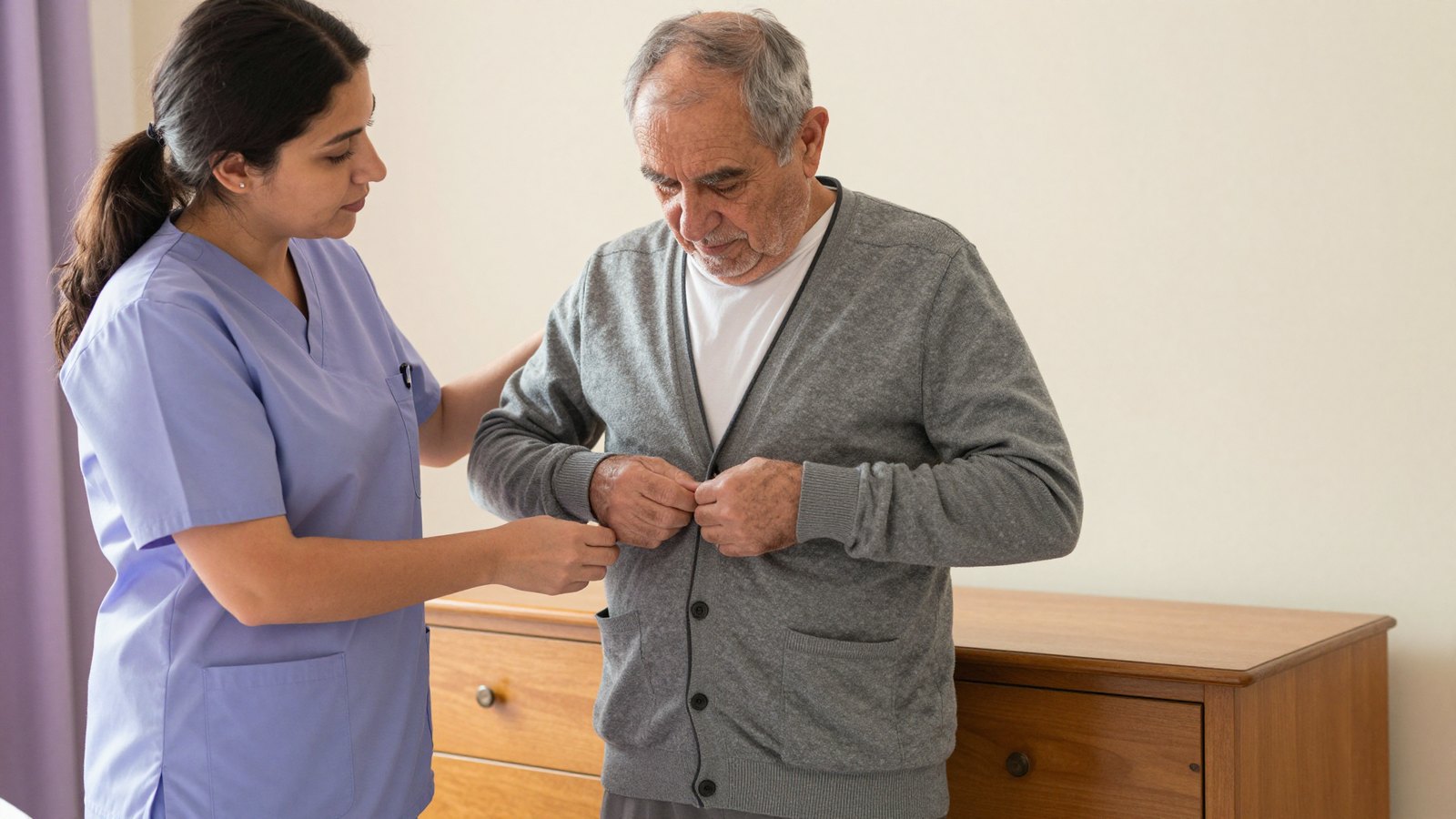
Occupational therapy is not about a job. It is about the things that fill a day: buttoning a shirt, making tea, getting in and out of the shower, reaching the plates on the second shelf. When an illness or an injury makes those things hard, an occupational therapist helps you find a way to do them again, safely and your own way.
If your doctor orders it and you qualify, Original Medicare covers occupational therapy at home at no cost to you.
One thing to know: the therapist teaches you to do these things yourself, with better techniques and the right tools. An occupational therapist is not a caregiver who does them for you.
What occupational therapy looks like at home
Since his stroke, Mr. Petrosyan's right hand does not do what he tells it. His wife has been dressing him, and it is wearing on both of them. His therapist brings a buttoning aid and an elastic shoelace, and they practice at the dresser. By the end of the week he gets his cardigan on by himself. It takes six minutes. He does not care how long it takes.
Mrs. Alvarez is afraid of the shower. She slipped once, and now she washes at the sink. Her therapist looks at the bathroom with her, suggests a shower chair and a hand-held sprayer, shows her how to sit, turn, and stand with a grab bar, and practices it with her until it feels normal again.
What the occupational therapist does
- Looks at your day. Bathing, dressing, toileting, cooking, and the routines that matter to you.
- Makes the bathroom safer. Suggests a shower chair, grab bars, a raised toilet seat, or a hand-held sprayer, and teaches you to use them.
- Finds easier ways. Sitting to dress, a reacher for the floor, a sock aid, large-handled utensils, easy-open pill caps.
- Rebuilds hand and arm use after a stroke or surgery, with exercises built around real tasks.
- Saves your energy. For heart failure, COPD, and after a long illness: how to pace a shower or a meal so you are not wiped out afterward.
- Works on thinking and memory where it affects daily tasks, such as a safe routine for medicines or the stove.
- Teaches your family how to help in a way that keeps you doing as much as you can.
What the first visit looks like
The first visit usually happens within 24 hours after your doctor or the hospital sends the order. The therapist asks what you want to do again, watches you move through a few real tasks, and looks at the bathroom, bedroom, and kitchen with you. The plan starts that day. You get one named coordinator who knows your case. We call before every visit, and we send the same therapist whenever we can. If someone else must come, we call first.
When to call
Call 911 for a fall with a head injury, chest pain, trouble breathing, or sudden weakness or confusion. Call your therapist or nurse for a near fall, new pain with a task, dizziness in the shower, or a piece of equipment that does not feel steady.
What family can do
- Resist the urge to take over. Slow and independent beats fast and done for them.
- Set up the space. Put the things they use most at waist height. Move the step stool out of the kitchen.
- Ask about equipment before you buy it. The therapist can tell you what will actually help in your bathroom.
- Notice the wins. A shirt buttoned alone is a big day.
Cost and who qualifies: with Original Medicare, covered home health is $0 if you qualify, and your doctor decides. See what Medicare covers, who qualifies, and what is not covered.
Our team speaks English, Spanish, Armenian, Russian, and Tagalog. Speak another language? Call (818) 579-4012 and ask whether we have staff who speak it. If we do not have staff who speak your language, we arrange a free interpreter.
Questions people ask
What is the difference between occupational and physical therapy?
Does the therapist bring equipment?
Can occupational therapy help with memory problems?
Have a question about home health?
Struggling with the shower, getting dressed, or the kitchen? Call us. We will work with your doctor on an order for occupational therapy at home.
(818) 579-4012Sources
This page is general information for families, not medical advice. Talk with your doctor about your situation.