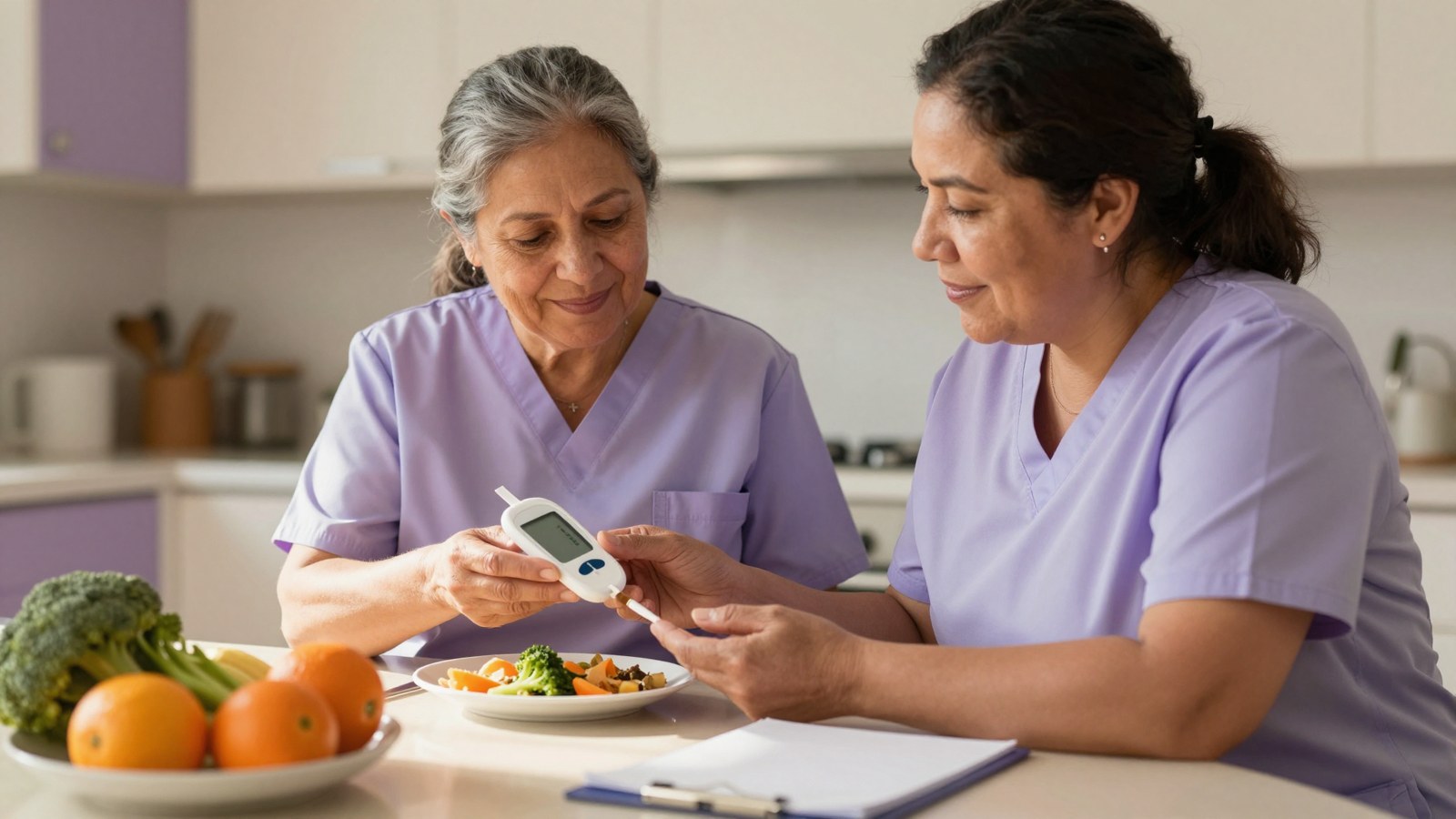
Diabetes is managed at the kitchen table: what you eat, when you take your medicine, how your feet look tonight. A home health nurse comes to that table and helps you get the routine right, especially after a change in medicines or a hospital stay.
If your doctor orders it and you qualify, Original Medicare covers home health at no cost to you.
What diabetes can look like at home
Your mom has lived with diabetes for years, but something has changed. The doctor added insulin, and she is nervous about the needle. The numbers on her meter do not make sense, so some days she stops checking. There is a sore on her foot that she did not notice until you saw the spot on her sock.
The pill bottles on the counter have multiplied. Some afternoons she gets shaky and sweaty and does not know why. You want to help, but you are not sure what is normal.
This is common after a hospital stay or a change in medicines, and it is what home health is built for. A nurse comes to her kitchen table, looks at the real meter and the real pill bottles, and helps her get the routine right.
How home health helps
Your doctor sets the plan of care, and your team works with the doctor to update it as needs change.
Skilled nursing
Your nurse teaches blood sugar checks and, if it has been ordered, how to inject insulin, with the goal that she can do it herself. Together you go through every medicine, match it to the doctor's list, and sort out what goes with which meal. The nurse checks her feet and skin, cares for slow-healing sores the way the doctor ordered, and watches for infection. You and your family learn what high and low blood sugar look like and what to do about each. Our wound care page has more.
Physical therapy
Numb feet can make it hard to feel the floor, and that can raise the risk of a fall. The physical therapist works on balance, safe walking, and the front steps, and builds a simple activity routine she can keep up.
Occupational therapy
Occupational therapy is about daily tasks. The therapist practices simple meal prep right in her kitchen, with foods that fit the plan her doctor gave her. If eyesight is a problem, the therapist can suggest tools like a magnifier or a talking meter and show her how to use them.
Medical social work
Supplies and healthy food cost money. The social worker helps you look for programs near you, including food and medicine cost help where it exists.
Home health aide
While your mom is getting skilled nursing or therapy, an aide can help with bathing, dressing, and personal care. Aides are part of the skilled care plan, not a separate service.
What the first visit looks like
The first visit usually happens within 24 hours after the doctor or hospital sends the order. You can also call us first. We coordinate the order with the doctor. A nurse comes to the house and gets to know your mom: what her days look like and what worries her most. They check vital signs, look at her meter and her medicines, and look closely at her feet. Then they walk the house with you to spot hazards like a loose rug or a dark path to the bathroom.
From there, you get one named coordinator who knows your case. We send the same nurse or therapist whenever we can, and we call before every visit. If someone else must come, we call first. Our team speaks English, Spanish, Armenian, Russian, and Tagalog. If your family speaks another language, call and ask whether we have staff who speak it. Our number is (818) 579-4012.
When to call
Call 911 if your mom passes out, cannot be woken up, has a seizure, or is too confused to swallow safely. Also call 911 for chest pain, trouble breathing, or signs of a stroke like a drooping face, a weak arm, or slurred speech.
Call your doctor or nurse for things that are not emergencies but still matter: readings far outside the range your doctor gave you, repeated low blood sugars, a new sore or blister on a foot, redness or warmth around a wound, vomiting, or feeling very thirsty and tired. Your nurse shares readings and concerns with your doctor between visits. When in doubt, call.
What family can do
- Keep a simple log. Readings, meals, and how she felt. Bring it to each visit.
- Look at her feet. Once a day, check for redness, blisters, or cuts. Keep slippers by the bed so she is never barefoot.
- Keep a low blood sugar fix within reach. Ask the nurse what to keep on hand.
- Let her do it herself. Sit with her, but let her hands do the work.
- Take care of yourself too. Our guide on caring for a parent or spouse is a good place to start.
Cost and who qualifies: with Original Medicare, covered home health is $0 if you qualify, and your doctor decides. See what Medicare covers, who qualifies, and what is not covered.
Questions people ask
Can a nurse teach me to give myself insulin?
Do you help with foot wounds?
Do you help with meals?
Have a question about home health?
New to insulin, or struggling with blood sugar at home? Call us and we will check coverage and talk with your doctor.
(818) 579-4012Sources
This page is general information for families, not medical advice. Talk with your doctor about your situation.