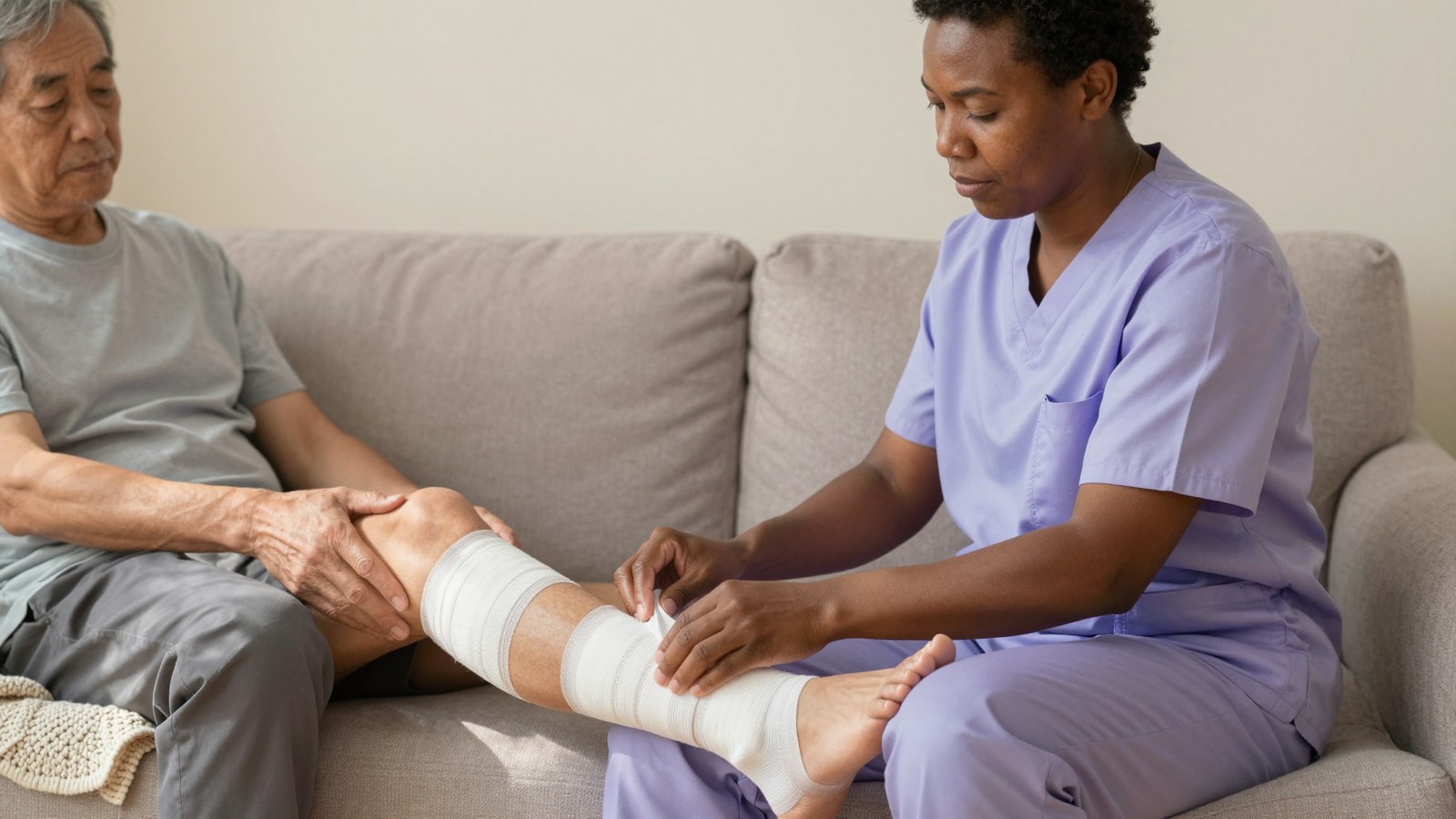
Wounds heal better with the right care at the right time, and getting to a clinic twice a week is hard when you can barely get down the steps. A home health nurse brings that care to you and keeps your doctor informed about how it's going.
If your doctor orders it and you qualify, Original Medicare covers home health at no cost to you.
What wound care can look like at home
Your dad came home from the hospital with a long incision and a sheet of instructions. The dressing needs to be changed, and nobody in the family feels sure about doing it. You peel back the tape at the kitchen table and wonder what "normal" is supposed to look like.
Or maybe your mom has a sore on her heel that started small and keeps getting bigger. She has diabetes and cannot feel her feet well. The wound clinic is across town, and getting her down the front steps and across the parking lot wears her out for the rest of the day.
Wounds like these have a better chance of healing when the right care happens on schedule. That is hard when leaving the house is a whole project. Home health brings a skilled nurse to your living room instead. The wounds home health nurses commonly treat at home include:
- Surgical incisions and drains.
- Pressure sores from sitting or lying in one position.
- Diabetic foot ulcers.
- Leg wounds related to circulation or swelling.
- Skin tears and slow-healing wounds.
How home health helps
Your doctor writes the wound orders. Our team carries them out at home and keeps your doctor informed, so treatment can change when it needs to.
Skilled nursing
Your nurse:
- Cleans and dresses the wound exactly the way your doctor ordered.
- Measures the wound regularly and notes its size, depth, color, and drainage.
- Watches for signs of infection and lets your doctor know if something changes.
- Teaches a family member how to handle a dressing change between visits, if you want that. Explains skin care and the foods that support healing.
Physical therapy
- Helps you move more often, because sitting or lying in one spot puts pressure on the skin and can slow healing.
- Teaches simple ways to shift your weight and change position in a bed or chair.
- Works on walking with a foot wound so you put less pressure on the sore spot.
Occupational therapy
- Sets up the bed, chair, and bathroom so you can rest and bathe without rubbing or pressing on the wound.
- Shows you how to get dressed, wash up, and keep the dressing dry.
Medical social work
- Helps you find community programs and resources outside our agency, such as programs that help with supplies or rides to follow-up appointments.
- Listens when the stress of a long recovery wears on you or your family.
Home health aide
- Helps with bathing and personal care in a way that keeps the dressing clean and dry, as part of the nurse's plan.
What the first visit looks like
The first visit usually happens within 24 hours after your doctor or the hospital sends the order. You have one named coordinator from the start, and we call before every visit. The same nurse comes back whenever possible, and if someone else must come, we call first.
At that visit, your nurse looks at the wound, measures it, and asks how it started and what has been done so far. Your nurse checks your other health conditions, goes through the pill bottles on the counter, and looks at where you sleep and sit. Then you hear the plan in plain words. Our team speaks English, Spanish, Armenian, Russian, and Tagalog. Speak another language? Call and ask whether we have staff who speak it. If we do not have staff who speak your language, we arrange a free interpreter.
When to call
Between visits, call your doctor or nurse if you notice:
- More redness, warmth, or swelling around the wound.
- Drainage that increases, changes color, or smells bad.
- Pain that is getting worse instead of better.
- A fever or chills.
- The wound looks bigger, deeper, or darker than before.
Call 911 for bleeding that soaks through the dressing and does not stop with firm, steady pressure. Also call 911 for trouble breathing, chest pain, or sudden confusion.
What family can do
- Keep a simple notebook by the bed. Write down the date of each dressing change and anything that looked different.
- Learn the dressing steps from the nurse and do them the same way each time. Wash your hands before and after.
- Help with position changes. A reminder to shift in the chair or turn in bed, as often as the nurse suggests, takes pressure off the skin.
- Offer protein at meals and fluids through the day, unless your doctor has set limits. Healing takes fuel, and the nurse can tell you what fits their diet.
Cost and who qualifies: with Original Medicare, covered home health is $0 if you qualify, and your doctor decides. See what Medicare covers, who qualifies, and what is not covered.
We also accept private insurance. Call us at (818) 579-4012. Families may call first, and we coordinate the doctor's order.
Medicare does not cover 24-hour care at home, meal delivery, or housekeeping and personal care when that is the only help you need. That kind of help is called home care, and our guide on home health versus home care explains where to look.
Medicare requires a face-to-face visit with a doctor or nurse practitioner, within 90 days before or 30 days after home health starts. Some doctors make house calls. Ask us, and we will help you find one. That doctor is independent of Comfort Care, and the choice is yours.
Questions people ask
How often will the nurse change the dressing?
Are wound supplies covered?
What if the wound gets worse?
Have a question about home health?
Have a wound that needs skilled care? Call us and we will check coverage and talk with your doctor.
(818) 579-4012Sources
This page is general information for families, not medical advice. Talk with your doctor about your situation.