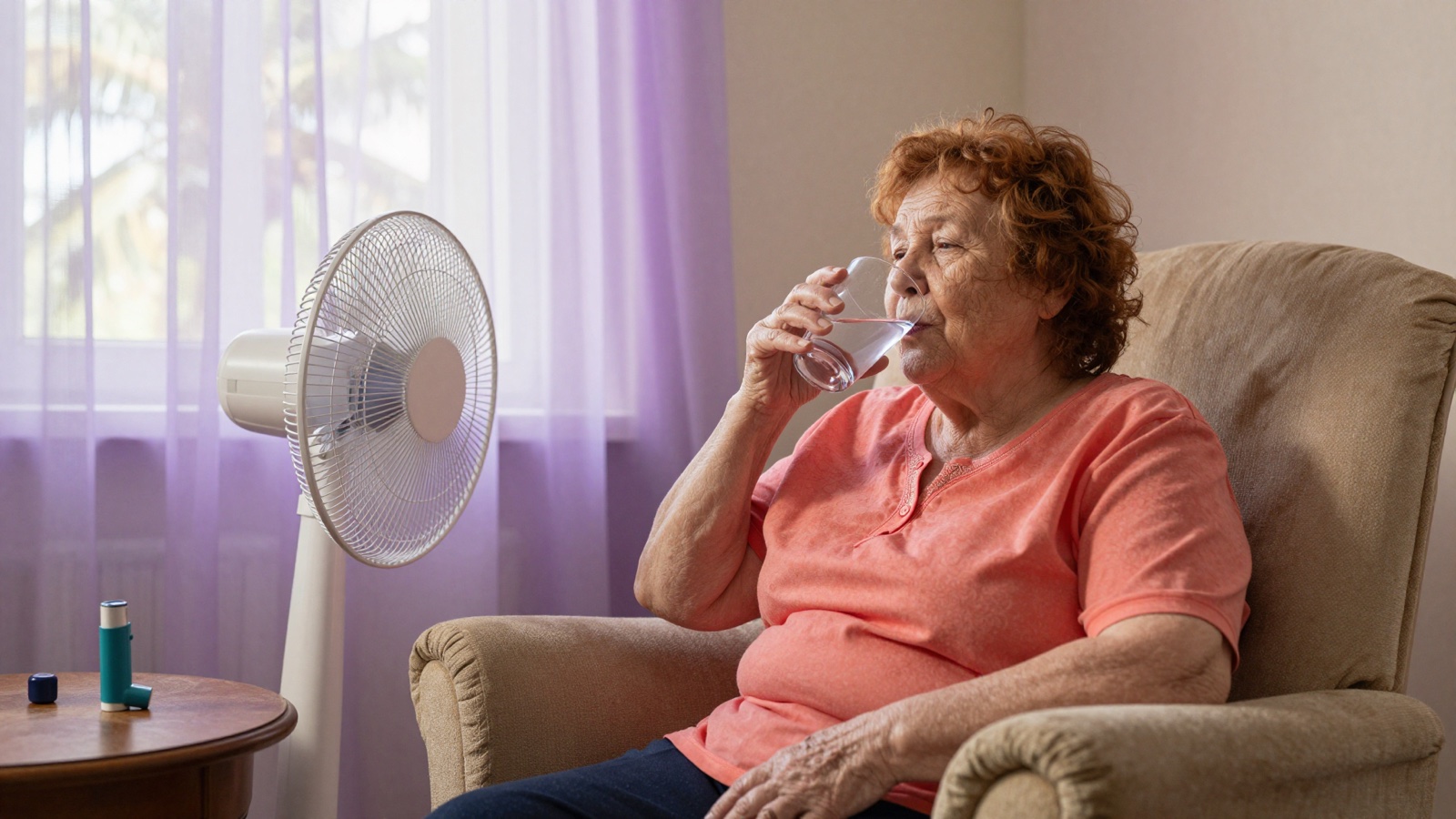
Summer in Los Angeles can be hard on the lungs. Hot days, smog, and wildfire smoke all make it harder to breathe, and that is even more true for someone with COPD.
This guide gives families a simple summer plan: how to keep the home easier on the lungs, what early warning signs to watch for, and how doctor-ordered home health can help. It does not replace your family member's doctor. Follow the care plan the doctor gave you.
Why summer is harder with COPD
COPD is a long-term lung condition that makes it harder to move air in and out. Several things in a Los Angeles summer can add to that:
- Heat. Hot air can feel heavy to breathe. The body also works harder to stay cool, which uses more energy and more breath.
- Smog. Ozone and fine dust in the air can irritate the lungs and set off coughing or wheezing.
- Wildfire smoke. Smoke can travel many miles. Even if you cannot see flames, the air outside may be unhealthy.
The CDC lists people with lung disease among those who are more at risk during hot weather and when smoke is in the air. You can find the links in the sources below.
Know the signs of a flare-up
A flare-up is when COPD symptoms get worse for a day or more. Catching one early can keep it from turning into an emergency. Tell the doctor soon if you notice:
- More shortness of breath than usual, or breathlessness during things that were easy last week.
- A cough that is worse, or more mucus, or mucus that changes color.
- More wheezing or a tight chest.
- Needing the rescue inhaler more often than the doctor said is normal.
- Poor sleep, new swelling in the ankles, or feeling unusually tired or confused.
Ask the doctor for a written plan that says what to do on a good day, a bad day, and a very bad day. Keep it on the fridge. A written plan helps everyone in the family act quickly instead of guessing.
Call 911 if there is severe trouble breathing, blue or gray lips, chest pain, or if your family member cannot speak a full sentence.
A simple summer plan for the home
Keep the air inside cooler and cleaner
- Use air conditioning or a fan on hot days if you can. If the home gets too hot, ask the doctor about cooler places to spend the day, such as a library or a senior center.
- When the air is smoky, keep windows and doors closed. Run the air conditioner on recirculate if it has that setting.
- Check the Air Quality Index (AQI) each morning. Many weather apps show it. On days when the number is high, plan to stay indoors.
- Avoid cigarette smoke, candles, incense, and strong cleaning sprays. These can bother the lungs all year.
Plan outings for the cool part of the day
Early morning is often cooler and the air is often cleaner. Plan errands and walks then, and rest in the heat of the afternoon. Bring water and the rescue inhaler. Ask the doctor how much fluid is right for your family member, since some people with heart or kidney problems have limits.
Pace the day
Breaking tasks into steps saves breath. Sit to dress, cook, and wash up. Breathe out slowly through pursed lips while you bend, lift, or climb. Rest before you are out of breath, not after.
Inhalers and oxygen: keep it safe
Many people with COPD use more than one inhaler. Some are for every day, and some are for emergencies. It helps to label them, and to ask the nurse or pharmacist to watch your family member use each one. The way you use an inhaler changes how much medicine reaches the lungs. Our coming home from the hospital checklist has tips for keeping medicines organized.
If your family member uses oxygen at home:
- No smoking, candles, gas stoves, or open flames nearby. Oxygen makes fire burn faster.
- Keep tubing out of walking paths so no one trips. Our falls and balance page has more ideas.
- Do not change the flow setting unless the doctor says to.
- Keep the oxygen supplier's phone number where everyone can see it.
Equipment is 20% of the Medicare-approved amount after the Part B deductible. See Medicare's page on durable medical equipment in the sources below.
How home health can help
Home health is skilled medical care at home, ordered by a doctor. For someone with COPD, the care may include:
- A nurse who listens to the lungs, checks oxygen levels, reviews medicines, and teaches the family what a flare-up looks like. See our COPD page for more.
- A physical therapist who builds strength and teaches pacing and breathing techniques. See physical therapy.
- A social worker who can talk with the family about worry, caregiver strain, and support in the community. See medical social work.
Only the doctor decides whether home health fits. The first visit is usually within 24 hours after the doctor or hospital sends the order. Families may also call us first, and we coordinate the order with the doctor. We call before every visit, and your family member has one named coordinator. Our first visit walkthrough explains what to expect.
Medicare requires a face-to-face visit with a doctor or nurse practitioner, within 90 days before or 30 days after home health starts. Some doctors make house calls. Ask us, and we will help you find one. That doctor is independent of Comfort Care, and the choice is yours.
A word on cost
Under Original Medicare, covered home health services cost $0. Medicare Advantage plans may use their own networks and rules, so check with your plan. For details, see our coverage page.
Questions to ask the doctor before summer
- What is our written plan for a bad breathing day?
- Which inhaler is for every day, and which is for rescue?
- Do you want us to check oxygen levels at home? What number should make us call?
- Are there vaccines my family member should talk about with you?
- Would home health help right now?
Key takeaways
- Heat, smog, and smoke can make COPD harder in Los Angeles.
- Learn the early signs of a flare-up and keep a written plan on the fridge.
- Check the AQI each morning, and plan outings for the cooler part of the day.
- Keep oxygen away from flames and keep tubing out of walking paths.
- Only the doctor decides whether home health fits.
Questions people ask
Should my parent go outside on smoky days?
Can someone on oxygen get home health?
What does home health cost under Medicare?
Have a question about home health?
Want to talk through a summer plan for a family member with COPD? Call (818) 579-4012 and we will explain the steps.
(818) 579-4012Sources
- Medicare.gov: Home health services
- Medicare.gov: Durable medical equipment coverage
- CDC: About COPD
- CDC: Heat and older adults
- CDC: Wildfire smoke and your health
This page is general information for families, not medical advice. Talk with your doctor about your situation.